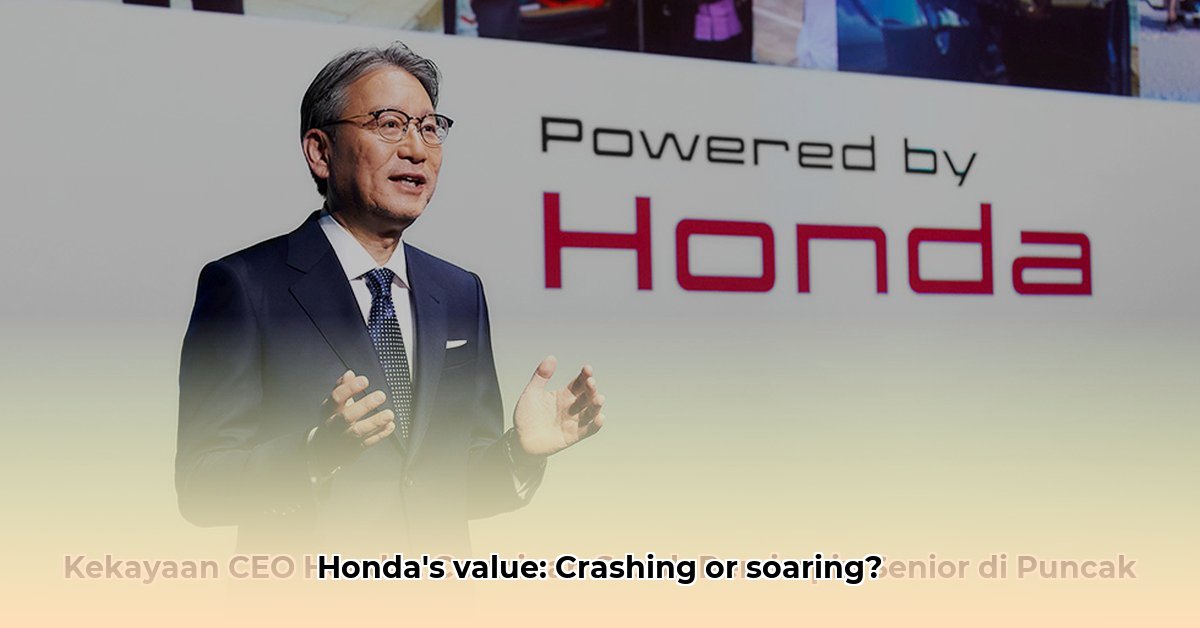
Honda's net worth, a reflection of its overall market value, has recently experienced a significant downturn, prompting concerns about the future of this automotive giant. While the company reached a substantial $44.45 billion valuation by March 21, 2025, a subsequent 24.40% decline necessitates a comprehensive analysis of the contributing factors and potential implications. This article will delve into the complexities of Honda's financial situation, examining the causes of this recent dip, assessing its diversified portfolio, and exploring various scenarios for its future prospects.
The Recent Decline: A Multifaceted Challenge
The recent drop in Honda's net worth isn't attributable to a single cause but rather a confluence of factors impacting the global automotive industry and Honda's specific strategies.
Global Economic Headwinds: The current global economic climate, characterized by persistent inflation, supply chain disruptions, and volatile energy prices, has dampened consumer spending, particularly in the discretionary automotive sector. This directly impacts Honda's sales figures and overall market valuation. How significantly will these economic pressures affect Honda's bottom line in the next fiscal year?
Intense Industry Competition: The automotive industry is fiercely competitive, with both established players and new entrants vying for market share. Honda faces pressure to innovate and maintain its competitive edge, requiring substantial investment in research and development (R&D) and marketing efforts. What innovative strategies will Honda employ to differentiate itself in this competitive landscape?
The Electric Vehicle (EV) Transition: The shift towards electric vehicles presents both an opportunity and a challenge. Honda's investment in EV technology and its success in this burgeoning market will significantly determine its long-term financial health. Will Honda's EV strategy prove successful enough to counteract the losses in the traditional combustion engine market?
Internal Operational Efficiency: Honda's internal operations, encompassing manufacturing efficiency, marketing strategies, and the performance of its diverse business units (automobiles, motorcycles, financial services), all play a crucial role in its overall financial performance. How effectively is Honda able to manage these internal operations to maintain its profitability?
Beyond Automobiles: Honda's Diversified Portfolio
Honda's business model extends beyond automobiles, encompassing motorcycles, power equipment, and financial services. This diversification offers a degree of resilience against downturns in any single sector. However, the recent dip suggests that even with this diversification, challenges exist across multiple business units. Does this diversification strategy provide sufficient protection against future economic downturns?
Forecasting the Future: Potential Scenarios
Predicting the future is inherently uncertain, but several scenarios could unfold regarding Honda's net worth:
Successful EV Transition: If Honda successfully navigates the transition to electric vehicles, capturing a significant market share with its innovative EV models, its net worth could experience a strong rebound.
Stagnation or Decline: Conversely, a failure to adapt and innovate could lead to stagnation or further decline as competitors outpace Honda in the EV market.
Economic Recovery: A positive shift in the global economy would likely boost Honda's sales and improve its market valuation.
Strategic Partnerships: Strategic alliances and partnerships, particularly in areas such as battery technology and EV infrastructure, could significantly enhance Honda's competitiveness and boost its net worth. However, such partnerships also carry inherent risks.
Actionable Insights and Strategic Considerations
Honda's recent decline requires immediate and long-term strategic responses from various stakeholders:
1. Investors: Closely monitor Honda's financial reports and news releases. Consider diversifying investment portfolios to mitigate risk associated with individual company performance. Look beyond short-term volatility and focus on long-term growth prospects.
2. Honda Management: Aggressively address operational inefficiencies, streamline manufacturing processes, and accelerate innovation in EV technology. Invest in enhanced marketing strategies to build brand loyalty and attract new customers.
3. Suppliers: Strengthen relationships with Honda and collaborate on developing sustainable and cost-effective technologies for the EV market. Ensure reliable supply chains to meet rising demands.
4. Consumers: Evaluate the long-term value proposition of Honda vehicles considering various factors, including fuel efficiency, maintenance costs and resale value. Conduct thorough research before making purchasing decisions.
The future of Honda hinges on its ability to adapt to the rapidly evolving automotive landscape. Careful monitoring of global economic conditions, competitive pressures, technological advancements and the success of its EV strategy will be crucial in assessing its future prospects. The coming years will be pivotal in defining Honda's next chapter.